

not only for the beauty of its natural landscape
natural landscape, but also for its historical and cultural heritage.
The commune can be accessed by land, heading south from Valdivia (Route T-207) and then turning off on a gravel road towards Corral for approximately 50 kilometers. Another access to Corral is by river, using the services of tourist boats that leave from Valdivia or ferries, which are taken at the pier in the town of Niebla (17 kilometers from Valdivia).
The castles and stone fortresses, built by the Spaniards to defend themselves from the attacks of pirates and corsairs in past centuries, constitute a valuable historical heritage of the area. Likewise, the millenary forests of larch trees and coastal olive groves are a natural heritage that impress visitors with their beauty.
In addition, its beautiful beaches, artisanal fishing coves, along with the practice of trekking, recreational fishing and food with a local accent, make it an excellent option to consider in any season.
Where to go?
Spanish fortifications
The route of the castles and forts is enchanting, both for its architecture and for its views of the rivers. These constructions constituted the largest defense system built in South America, against the threat of pirates and corsairs to ravage the Pacific coast during the XVII and XVIII centuries.
The largest and best preserved is the Corral fort, which includes the bastion of San Sebastián de la Cruz and complete lines of cannons.
On the north bank of the river, there is the recently restored Fort Niebla, which has a museum with collections of the history of the fortresses. Fort Mancera, located on the island of the same name, is also a must-see. It was the first to be built by the Spaniards. In addition, there are the Amargos and San Carlos forts and the cannon batteries located in Chorocamayo and Morro Gonzalo, Corral.
Sea Route and Coastal Alerce Park
In the port city, it is unforgivable not to contemplate the Castillo de Corral, which in the summer season produces a historical representation with local actors.
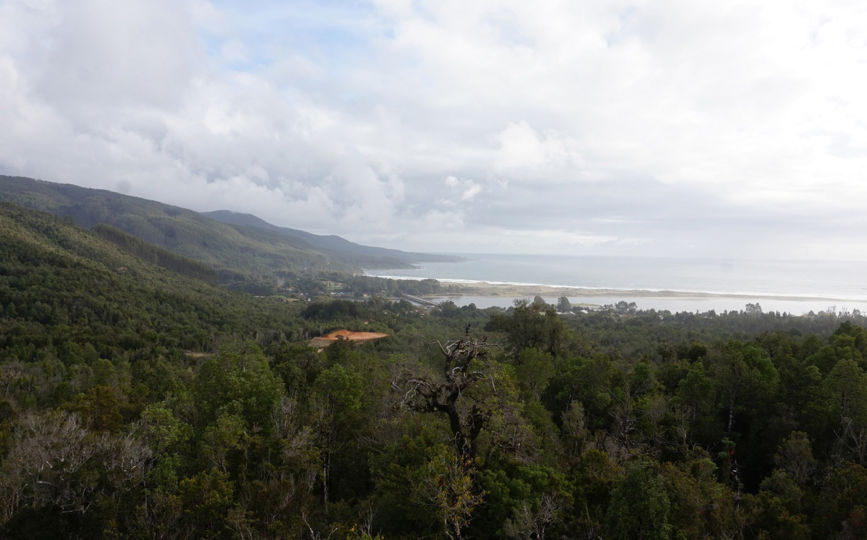
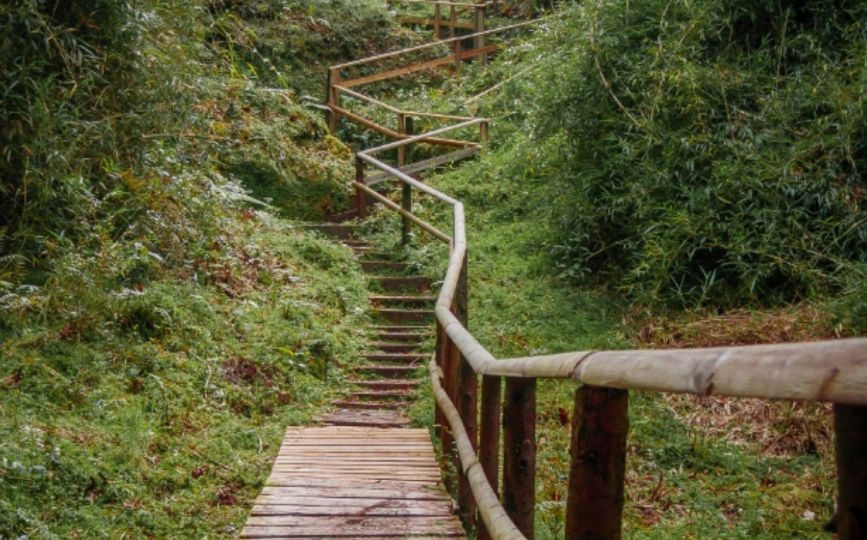
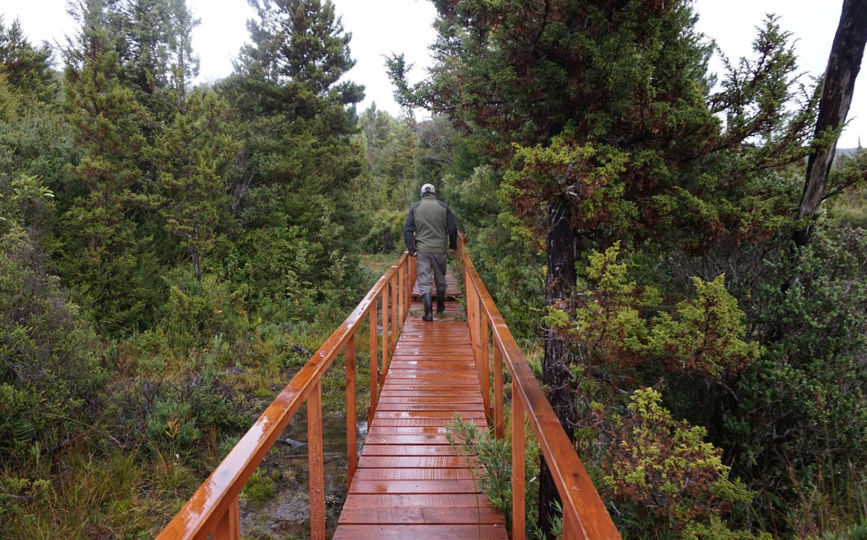
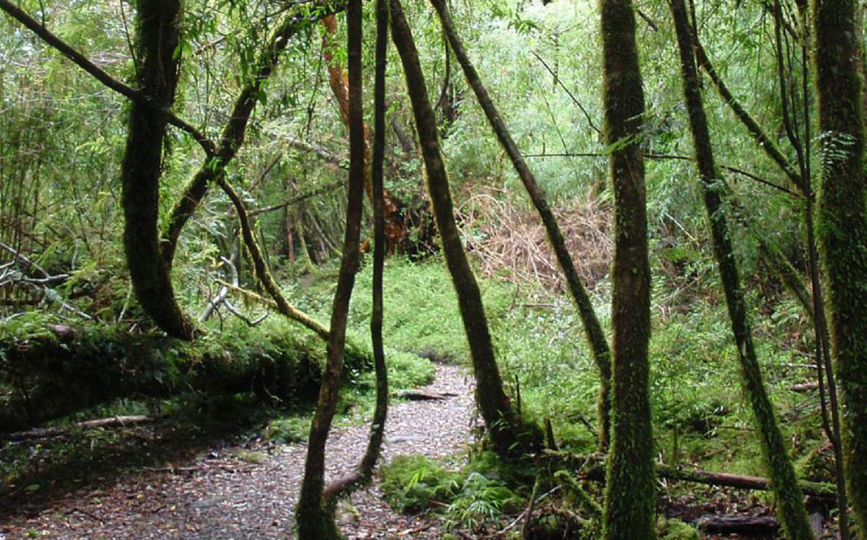
Chaihuin also offers cabins, a beautiful beach and, for nature lovers, access to the Alerce Costero National Park and the Coastal Reserve.
Valdiviana with beautiful trails to walk. There you can find the famous grandfather Alerce Milenario, a specimen with more than 3,500 years on our planet.
And then, from this port, you can access the Sea Route to visit fishermen's coves and charming places.
Ruta del Mar is the name given to the coastal road that connects the city of Corral with the town of Chaihuin. The 22 kilometers that separate them present a beautiful road with Spanish forts, such as Amargos and San Carlos, and several towns to visit such as Huape, and Los Liles with restaurants and viewpoints, or Huiro where there is a small artisanal fishing cove, loberías, trails and the indigenous community of Huiro.
Largest defense system in South America
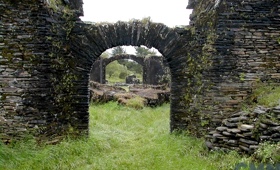
The Castle of San Pedro de Alcántara and its Plaza de Armas is located on Mancera Island, on the eastern edge of the bay. It was the foundational point of the defensive system. Founded in 1645, the stone castle was armed with fifteen pieces of artillery, and had a moat and two towers. In its interior it housed among other facilities a church and two convents: one Franciscan and the other Augustinian.
From 1760 and 1769 the population of Valdivia moved to the place to begin the construction of the city. On May 26, 1774 the neighbors agreed to return to Valdivia, which generated that only a military garrison remains on the island. Currently the ruins of the fortification are preserved in charge of the Universidad Austral de Chile, which maintains a site museum.
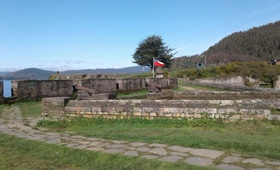
Located in the center of the port of Corral, the castle had two names. Its construction began in 1645 and its stonework was erected in 1678. In 1764 the Irish engineer Juan Garland rebuilt the fortification in cancagua stone and brick masonry.
The Castle was composed of three sectors: The castle itself (1765), the Battery of the Argolla (1764) and the Battery of the Cortina (1767). It was the one that contained more cannons of all the defensive complex, coming to possess a total of 21, of thick caliber.
A few years ago, recreations of life around 1800, with soldiers in uniform, period weapons, cannon fire and muskets are made as a semblance of civilian life and warfare in the forts.
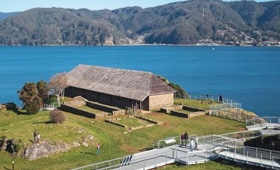
It is located in Niebla, on the northern edge of the bay. It was built in 1671 and named in honor of the viceroy of Peru, the X Count of Lemos. It rises on escarpments of cancagua of about 30 meters high, which make it inaccessible from the sea. Its 18 cannons intertwined their bullets with the cannons of the fortifications of Mancera Island.
In 1992, for the fifth centenary of the Discovery of America, it was restored with contributions from the Chilean and Spanish governments. At the moment a complete Museum of Site works where it is shown everything related to the defensive system and to the criteria of the restoration of 1992.
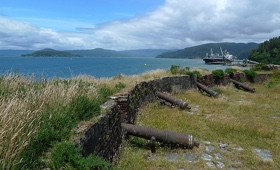
It is located on the southern shore of the bay, near Corral. It was built between 1655 and 1661 and rebuilt in 1679. It had eleven artillery pieces, which, due to their studied location, could beat the anchorage of enemy ships. It was isolated from the outside by a moat, which was crossed by a drawbridge. Inside, in addition to the barracks and the commander's house, there was a chapel.
At the end of the 18th century, the bastion was reinforced and some brick buildings were added to it.
Nowadays, none of the interior constructions of the complex are still standing, but the basic stone structure with its artillery pieces survives and has been restored. From it you can get a panoramic view of the fortifications of Niebla and Mancera.
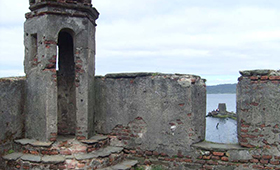
It was located at the western end of the southern shore of the bay. Begun in 1763 with plans by José Antonio Birt, it was a parapet enclosure where the troops were located. Through a drawbridge it was connected to a battery of six cannons with an oven for bullets. Nowadays only the ruins of its walls are preserved.